Leading a remote team: four rituals that make control unnecessary
When a team sits in one room, coordination happens as a side effect. You overhear what others are working on. You see when someone is stuck. You ask across the desk.
Distributed, all of that disappears — and the most common reaction is the wrong one: more status requests, more meetings, more checking in. Control as a substitute for visibility.
It costs time, breeds distrust, and does not fix the problem. What does fix it is four fixed rituals.
Ritual 1: The written start of day
No video call. Everyone writes three lines each morning, in one place everybody reads:
- What I finished yesterday
- What I plan today
- Where I am stuck
Three minutes per person, asynchronous, readable in any time zone. The third line is the actual purpose: it surfaces blockers before they are two days old.
The place matters. Not the chat — things scroll away there. A feed where posts stay and can be pinned is the right home for this.
Ritual 2: A board that tells the truth
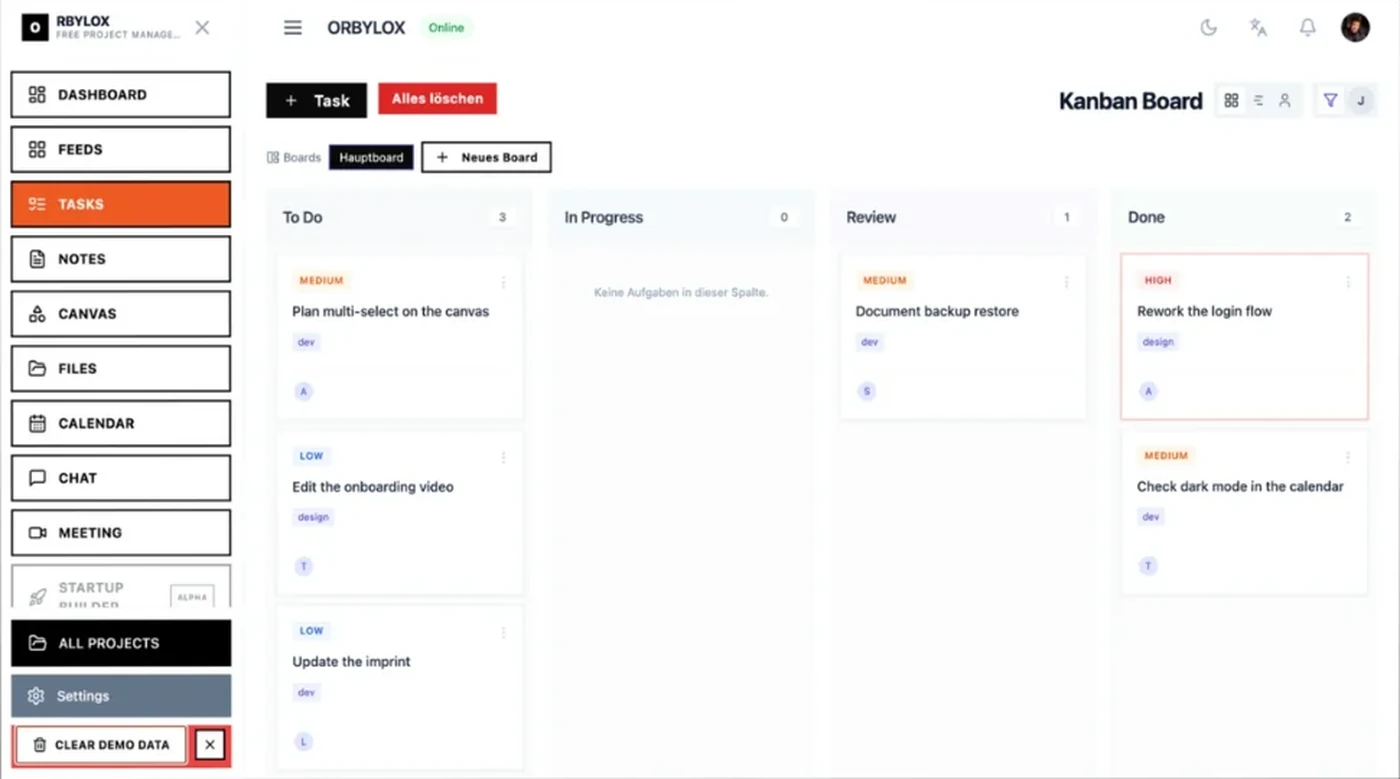
In an office you read the state from a colleague's face. Distributed, there is only the board — and if it is updated once a week before the meeting, it is worthless.
Two conditions for it to work:
- Moving a card must take under five seconds and work from anywhere, including a phone between meetings.
- Blockers belong on the ticket, not in someone's head. If task A waits for B, that goes on the card — then everyone sees at a glance which task is holding up three others.
The most common setup mistakes are covered in 5 mistakes every team makes with Kanban.
Ritual 3: One fixed hour when everyone is present
Working fully asynchronously sounds good and rarely works. Some questions need five minutes of conversation instead of three days of writing.
So: one fixed hour per day when everyone is reachable. With spread time zones, find the overlap — and if it is only 45 minutes, take those.
During that hour: short questions answered immediately, no scheduling needed. Outside it, the opposite applies — nobody owes an instant reply.
The point is not the hour itself but the clear boundary. Without it, everyone feels obliged to be reachable all day, and that is the fastest route to burnout.
Ritual 4: The weekly review, prepared in writing
Once a week, 30 minutes. But: everyone writes their points in beforehand.
The difference is large. In an unprepared round, the loud people talk. In a prepared one, every point sits equally in the list — including from the person who dislikes interrupting.
Three questions are enough:
- What went better than expected?
- What held us up?
- What will we change concretely by next week?
The third is mandatory. A review without a change is a conversation.
What you do not need
No presence indicator. A green dot says nothing about work, but it creates pressure to keep it green.
No screen monitoring. It measures mouse movement, not results — and reliably destroys the trust that distributed work runs on.
No daily video standup. A video standup costs eight people 30 minutes each including context switching. Written, it costs three.
The real point
Control is an attempt to replace missing visibility with questions. Rituals create visibility without asking.
Once you can see at a glance what everyone is working on and who is waiting for what, the urge to control disappears by itself — and with it the meetings that were meant to satisfy it.
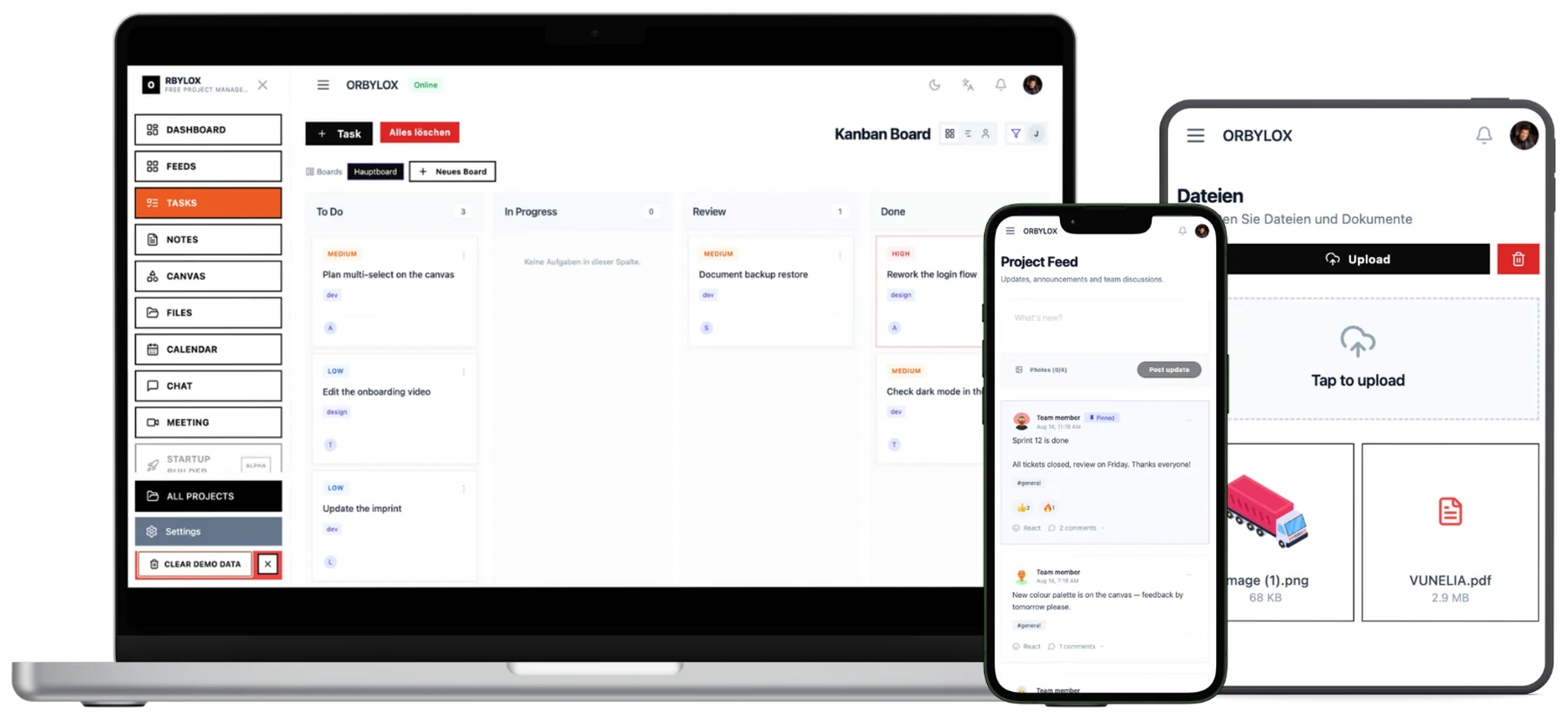
In ORBYLOX the feed, board, chat and video meetings live in the same project, so these four rituals are not spread across four tools.