Setting up a Kanban board: 5 mistakes every team makes
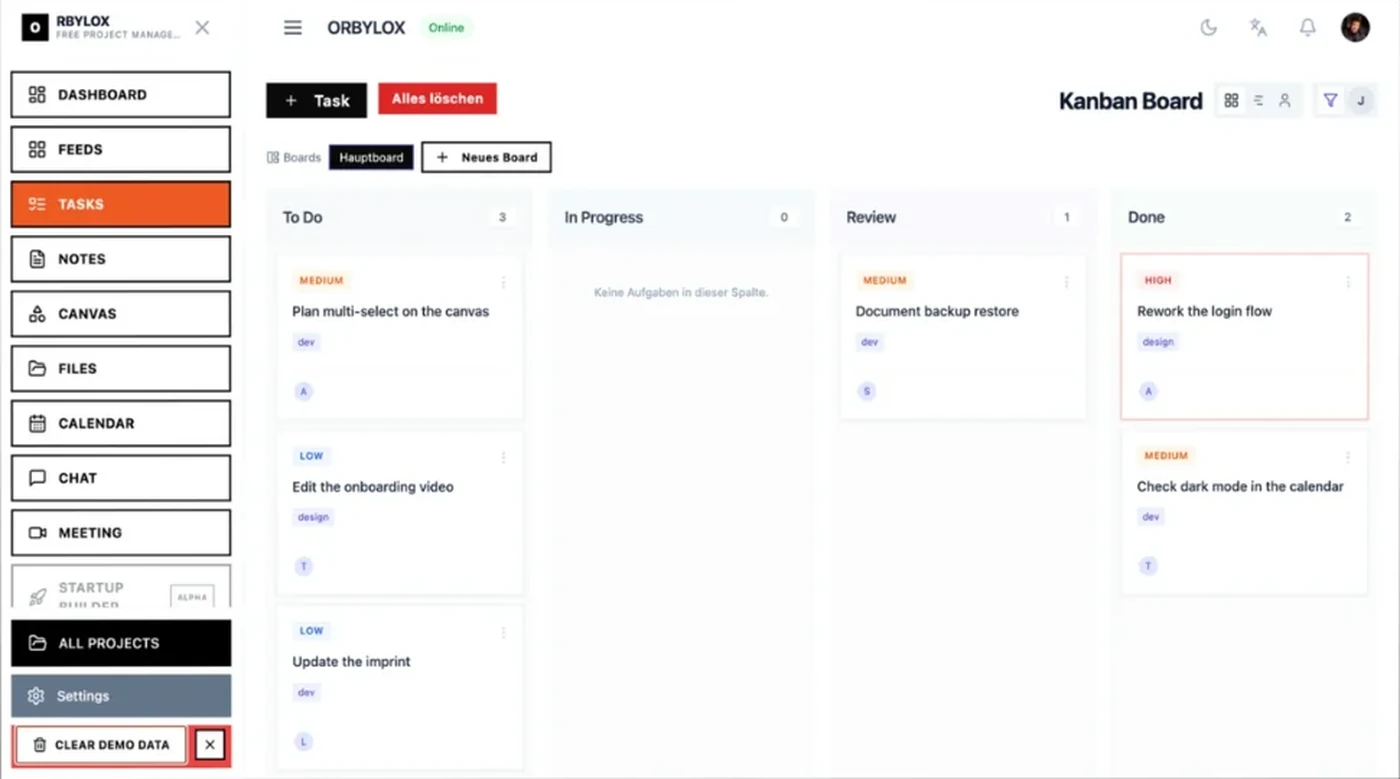
A Kanban board takes five minutes to create. Four columns, a few cards, done. Two weeks later half the tickets sit in "In Progress", nobody knows what anyone else is doing, and the board only gets updated before the weekly meeting.
That is rarely the tool. It is five decisions made at the start without thinking about them.
1. Too many columns
The most common one. A team maps its entire process: Backlog, Refinement, Ready, In Progress, Review, Test, Approval, Done. Eight columns for four people.
Every column is a handover. Every handover is a place where work waits. With eight columns, a task has seven chances to sit still.
The fix: start with four — To Do, In Progress, Review, Done. Add a column only after you have missed it three times. Not before.
2. No limit on work in progress
"In Progress" without a cap is not a column, it is a warehouse. Everyone pulls new work because starting things feels productive. You end up with twelve things begun and none finished.
A WIP limit is a number on the column header: no more cards than this. To start something new, you must first finish something — or help whoever is stuck.
Rule of thumb: number of people on the team, plus one. Four people, limit of five.
It feels tight at first. That is the point.
3. Tickets that mean everything and nothing
"Redo the website" is not a ticket. It is a project. It sits on the board for three months, nobody touches it, and eventually it becomes furniture.
A good ticket meets three conditions:
- One person can finish it alone
- It takes no more than two days
- You can say clearly whether it is done
"Redo the website" becomes: Home page: replace the copy, Check required fields on the contact form, Compress images. Three things that actually happen.
4. Dependencies that live in someone's head
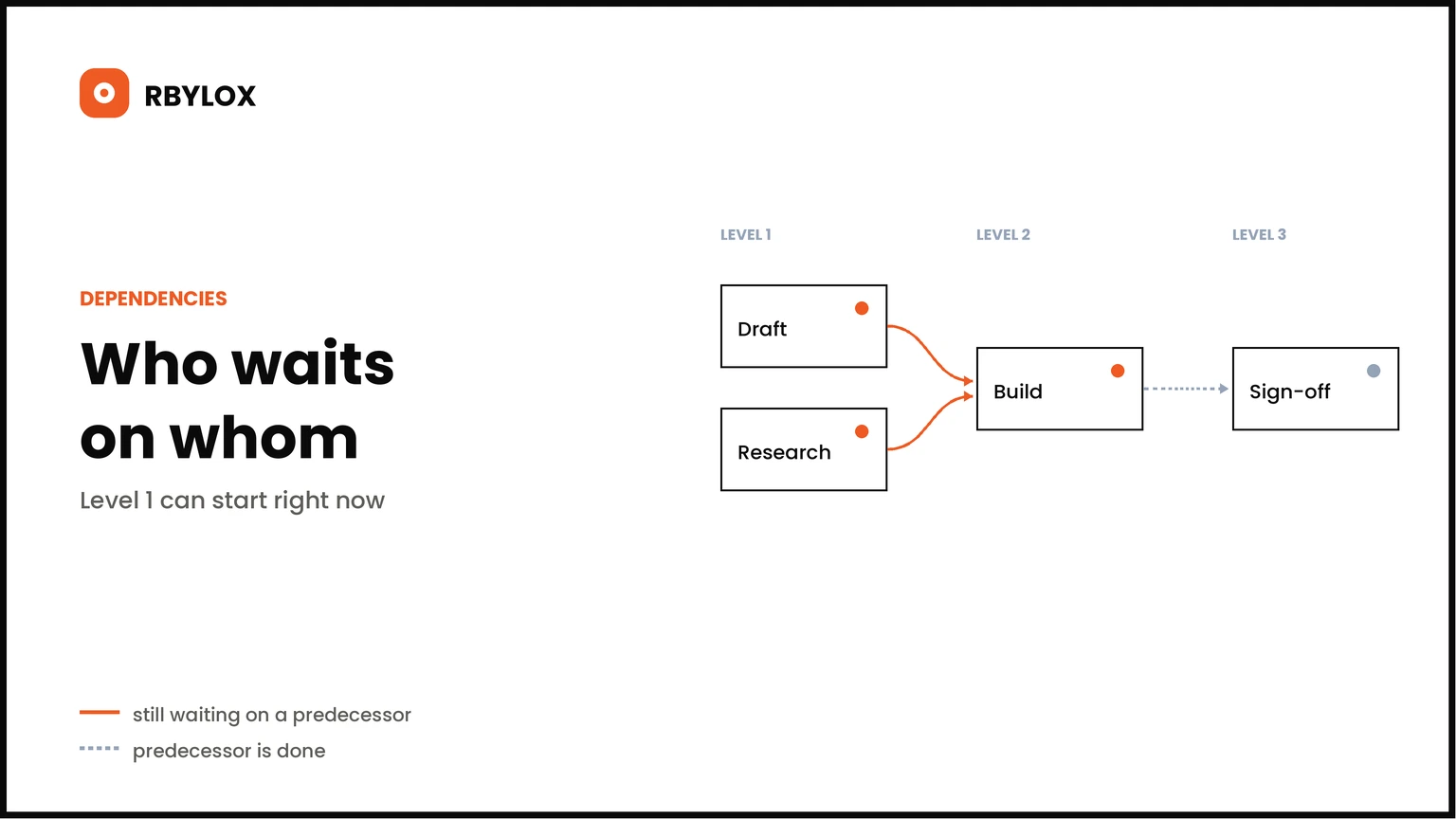
Ticket A waits for ticket B. Exactly one person knows this, and they are on holiday. Someone pulls A into "In Progress", discovers after two hours that it cannot be done, and pushes it back.
Record dependencies on the ticket. In ORBYLOX you set what a ticket waits for directly on the card — it then shows a lock, and the path to "Done" stays closed until the predecessors are finished.
The real gain is not the lock. It is visibility: you can see which task is blocking three others, and pull that one forward.
5. Treating the board as a report
If the board is only updated before the weekly meeting, it is not a board. It is a report about the past.
A board only works when it shows the current state — now, not Friday noon. That happens when moving a card takes under five seconds and works from anywhere, including a phone.
What you can change today
- Cut columns down to four
- Write a WIP limit on "In Progress"
- Review every ticket older than two weeks: split it or delete it
- Record dependencies instead of telling people about them
About twenty minutes of work. You will notice the difference in the first week.
Want to try it? ORBYLOX includes Kanban, dependencies and time tracking — free, no credit card.