Project kickoff: ninety minutes, five points
The kickoff has the worst effort-to-value ratio of any meeting — mostly because it runs as an introduction round with slides, and everyone leaves with a different picture in their head.
A kickoff has exactly one job: making sure everyone has the same idea of the outcome. Not motivating, not informing, not planning. Aligning.
How to spot a failed kickoff
Not by someone objecting — but by nobody objecting. A kickoff without a single question almost always means people did not understand what is expected of them and did not want to say so in the room.
The second sign arrives two weeks later: if questions come up that could have been settled in the kickoff, it was an introduction round.
The agenda that works
Ninety minutes. Five points. No more.
| Time | Point | Outcome |
| 10 min | Why are we doing this? | One sentence everyone can repeat |
| 20 min | What is in, what is out? | A list — both columns filled |
| 25 min | How do we work? | Where things live, when we talk |
| 20 min | Who decides what? | Names on the decisions |
| 15 min | What worries us? | The three biggest risks, named |
The third point gets the most time, and that is deliberate. Arguments about goals are rare; arguments about who records what, where and when cost more nerves over months than any question of substance.
The column everyone forgets
"What is not in" is the most valuable point on the whole agenda, and the most often skipped, because it feels like saying no.
From a real project:
| In | Not in |
| Menu, opening hours, directions | Online shop |
| Table booking with confirmation | Prepayment |
| German version | English version |
| Photos of the interior | Photos of dishes |
Every row on the right saves an uncomfortable conversation later. Saying it at the kickoff might get you a "wait, we do need that" — and that is exactly what the meeting is for. Four weeks later the same conversation is a change request with a price tag.
The question that changes the tone
Near the end, when everything seems covered, one round:
"What would have to happen for this project to fail in three months?"
This is not a mood question. It surfaces what people already think but will not volunteer — because nobody wants to be the pessimist at a kickoff. The answers are your risk list, and it is better than any you would write alone at your desk.
Write them down. Three to five points is enough.
Who attends
As few as possible. Concretely: everyone who takes on work, plus the person who decides on scope.
Anyone who only listens gets the notes. A kickoff with fourteen people is not an alignment, it is an event — and at events nobody says what they really think.
What goes out afterwards
Half a page, the same day. Longer and nobody reads it; later and nobody believes it is what was discussed.
- The goal sentence, verbatim
- The not-in list
- Who makes which decision
- The three risks
- The next date
If someone objects, that is the kickoff succeeding, not failing: the alignment just happened, only in writing.
In ORBYLOX
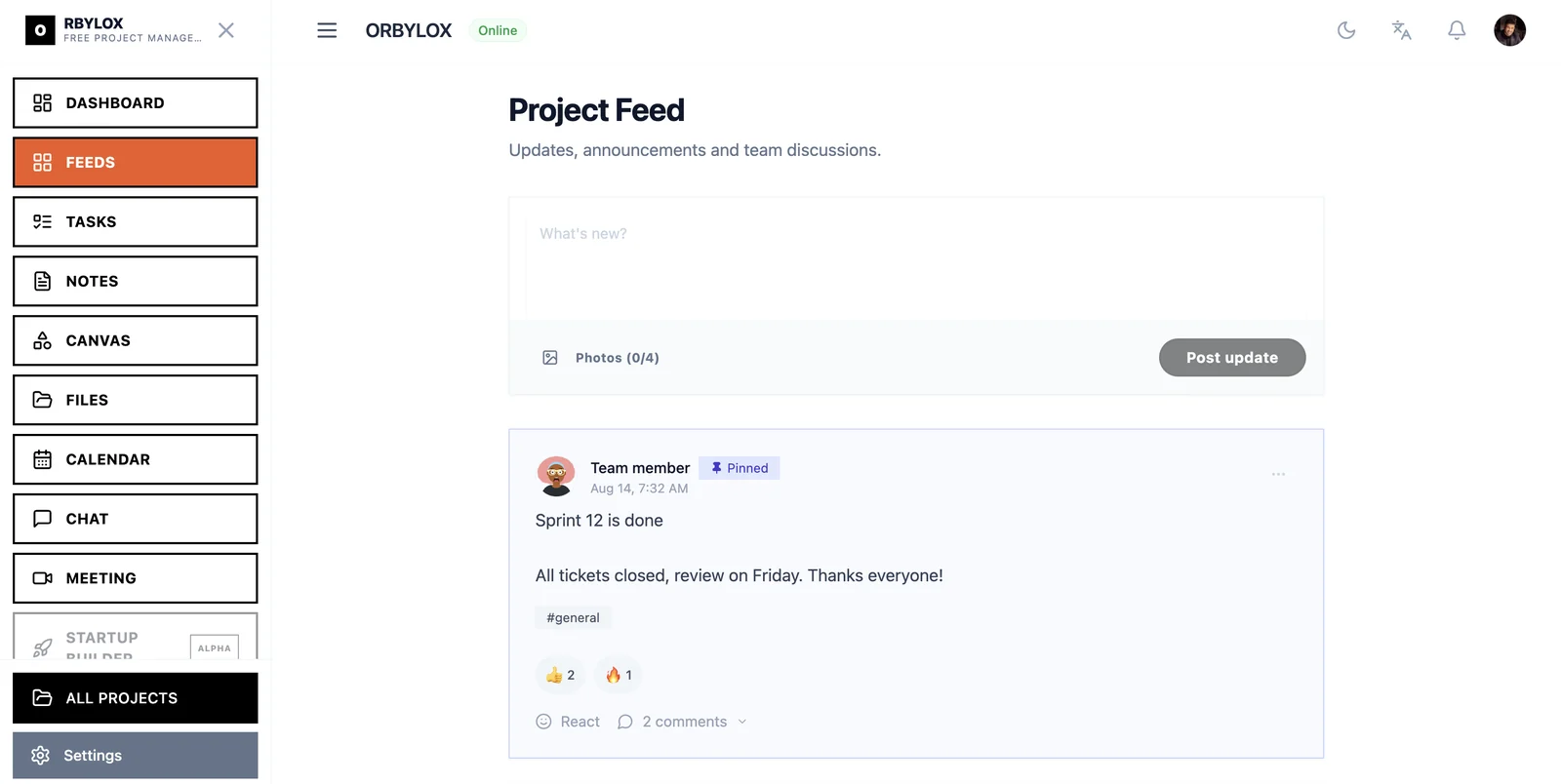
The agenda lives as a note in the project and is filled in during the meeting itself — so there is no second version afterwards that someone types up from their own notes.
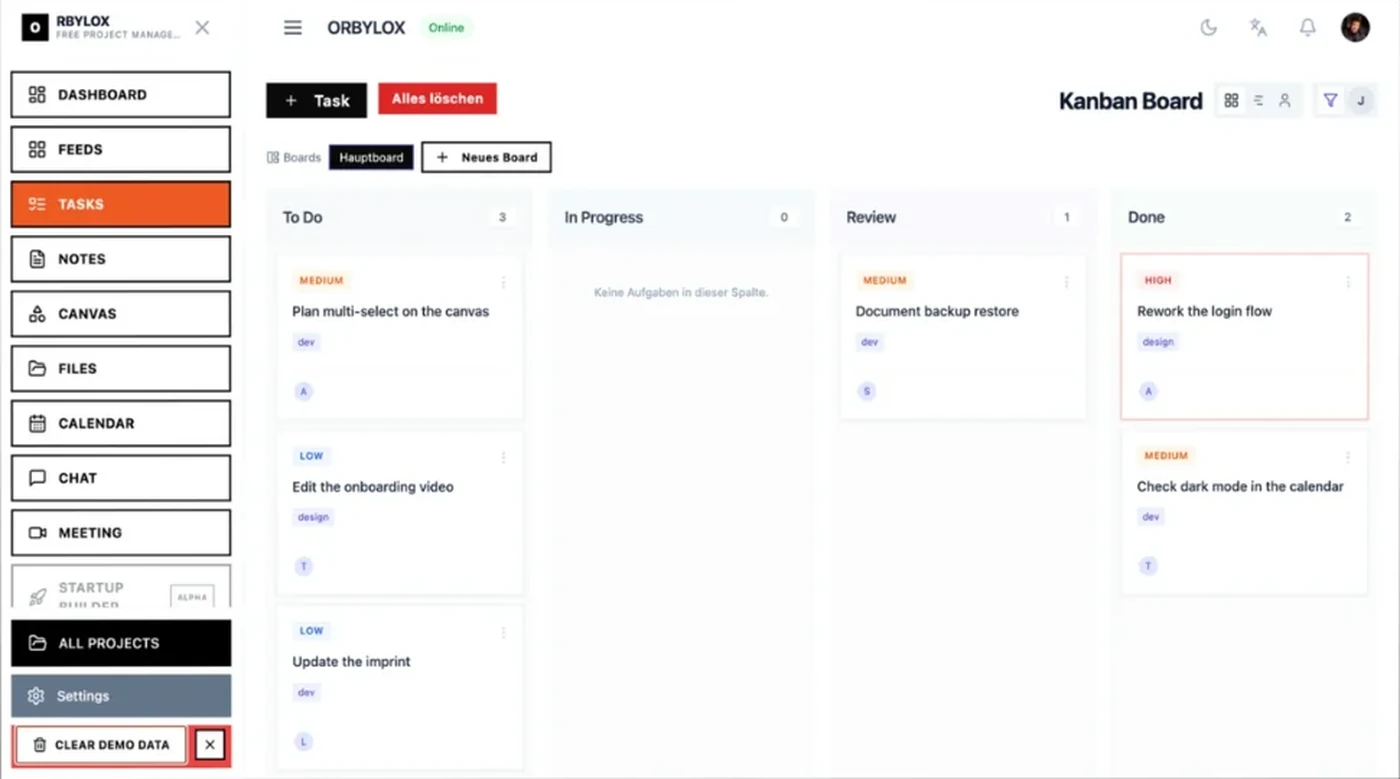
The "in" column becomes the first tickets, the risks become tickets with a due date. The goal sentence sits in the project description and is therefore one click away on every page — right where you go looking for it in month three.