Creating a Gantt chart — and when you do not need one
Few tools are asked for as often and needed as rarely. "We need a Gantt" usually means: "I want to know when we will be finished."
Project risks: five is enough
Risk management deservedly has a bad reputation in small teams: a forty-row table, filled in once and never opened again.
Closing a project: six points, one hour
At some point nobody calls any more, the board is not opened again, and six months later nobody knows whether the open items were ever dealt with.
Sharing out work in a team: one rule, one template
The most common answer to "who is doing this?" is silence — not from unwillingness, but because four people each assume one of the other three was meant.
Project status report: three questions, half a page
A status report nobody reads is more expensive than no report at all. The problem is almost always the same: it says what was done instead of where the project stands.
Planning milestones: states, not flags
In most plans, milestones are evenly spaced flags with names like "Phase 2 complete" — and they say precisely nothing.
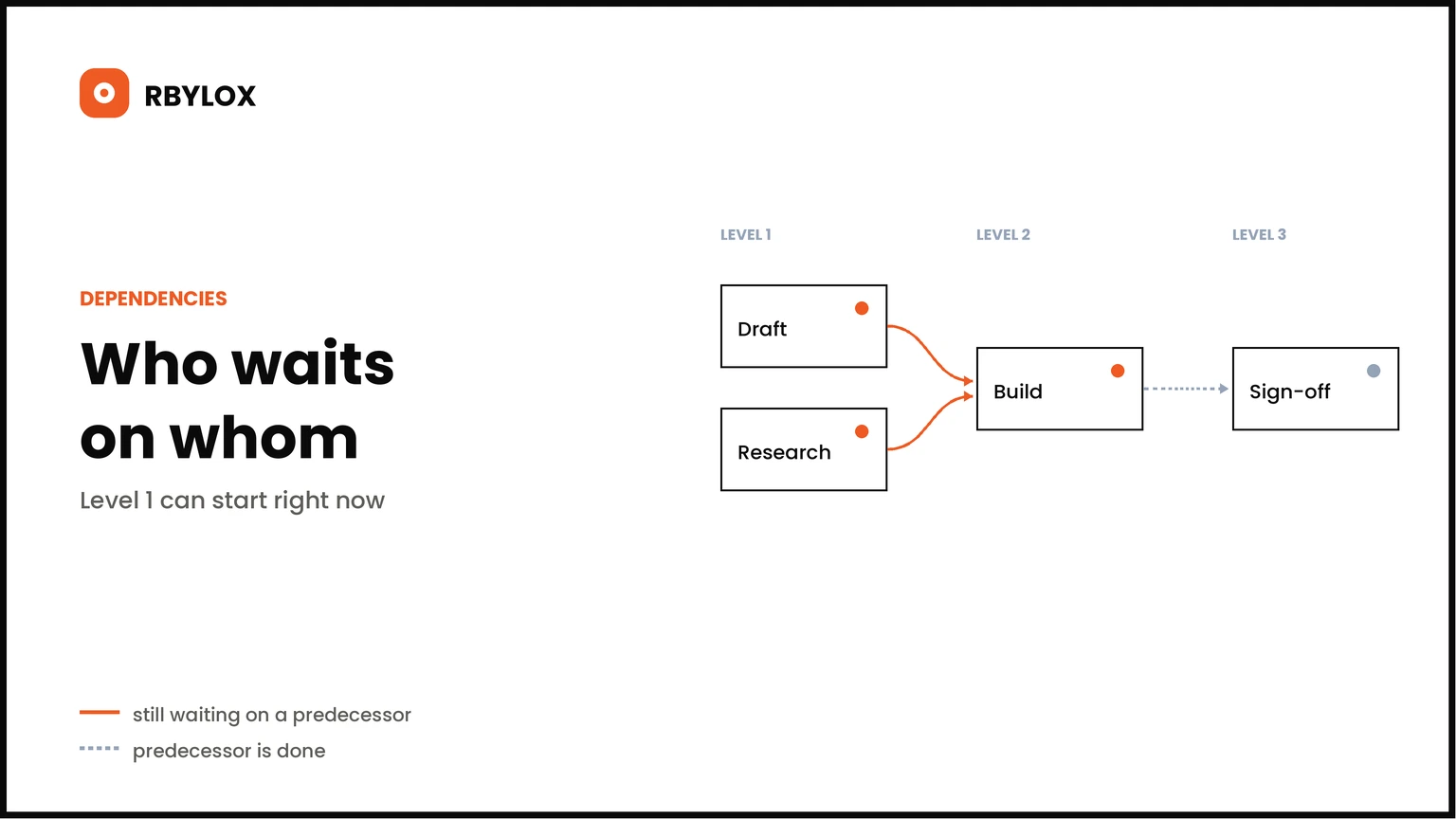
Making dependencies visible: why projects die of waiting
Projects rarely stall because of slowness. They stall because of waiting — and waiting is usually written down nowhere.
How to create a project plan: the 6 steps that matter
A project plan is not a Gantt chart with coloured bars. It is a chain of six decisions — and most plans fail at the fourth.
Work Breakdown Structure: splitting projects that would otherwise tip over
Big projects do not fail because of the effort. They fail because nobody knows what the effort is. A WBS makes it visible.